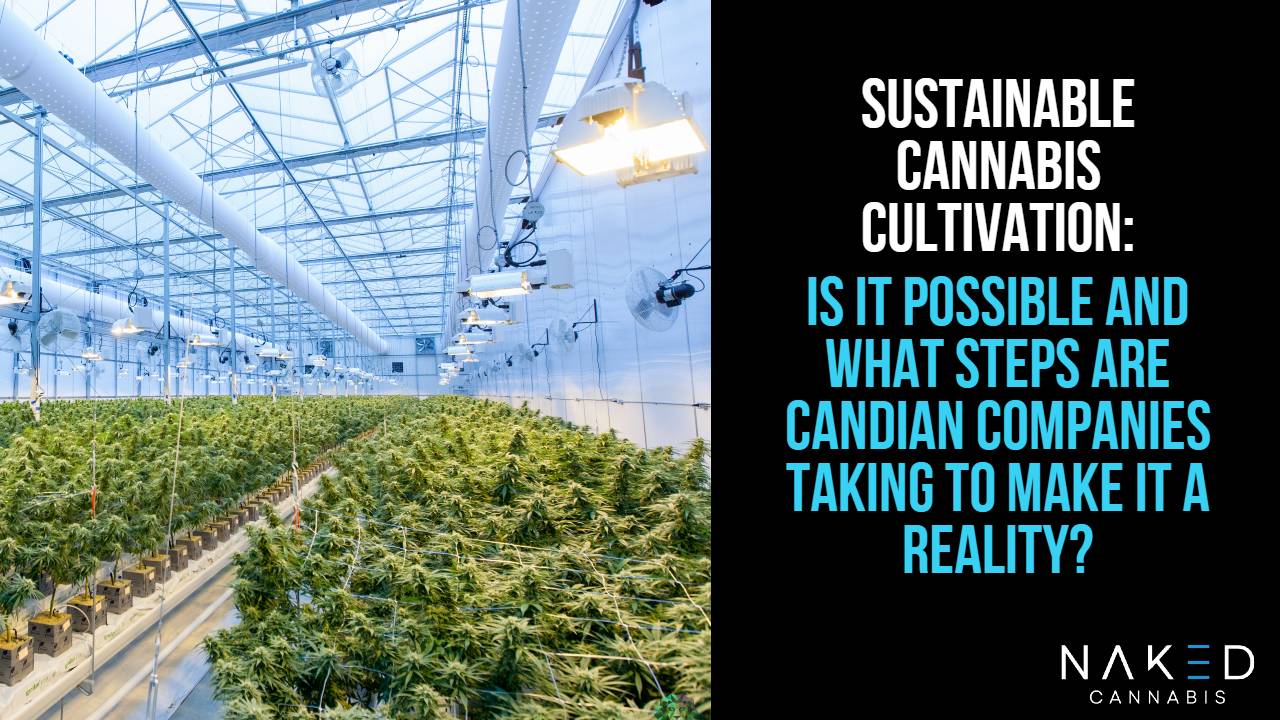
Cannabis isn’t exactly known for being green. That is to say, when it comes to sustainable cultivation, marijuana production has long-faced backlash for its water consumption, energy usage, and degradation of the environment. This has been a pressing concern not only for policymakers with environmental initiatives but also for eco-conscious consumers who genuinely care about the environment.
So what steps are the cannabis industry taking to ensure sustainable cannabis growth? So far, actions to promote clean and sustainable marijuana production are more about progress, not perfection. In other words, many cannabis cultivators are realizing that they can steadily reduce their overhead by adopting more sustainable practices as well as appease eco-conscious cannabis consumers.
A prognosis of a “greener” cannabis industry, therefore, certainly seems promising. For now, here are a few ways the cannabis industry is aiming to reduce its carbon footprint.
1. Weed And Water Conservation Improve Sustainability
Perhaps one of the most pressing issues when it comes to cannabis cultivation is water usage. In fact, cannabis has been deemed by the cannabis industry as a very thirsty plant. In other words, marijuana is an extremely water-intensive crop.
The California Dept of Fish and Wildlife published a report on cannabis growth in Mendocino and Humboldt County and concluded that each plant requires around six gallons a day for one hundred and gift days, or nine hundred gallons for the season. To put it into perspective a wine vineyard requires about half that, or 3.2 gallons a day per vine to supplement water loss.
So how can cannabis companies strive to reduce water usage and waste? Some cannabis companies are implementing hydroponic systems that according to a report by Cannabis Investing News, “can reduce water usage by as much as 70 percent by using less soil and collecting excess water in an overflow reservoir”.
Another more effective sustainable water practice that cannabis cultivators are adopting is the use of Aeroponic Growing Systems, which can cut back on water waste even more by suspending plants in the air with their roots exposed to receive nourishment from a nutrient-laden mist.
This specific practice reduces waste by recycling water and nutrients in what is known as a “closed-loop” system. While the majority of cannabis cultivators still use soil, many canna-businesses are using highly-efficient hydroponic systems that greatly reduce the use of soil and water output. In Canada for example, hydroponics is one of the more popular ways to grow cannabis indoors. As more companies catch the eco-wave, we are hopeful that the cannabis industry will continue to pursue better sustainable cultivation water conservation techniques to cultivate cannabis in a controlled and eco-friendly environment.
2. Reducing Energy Output of Cannabis Cultivation
Growing any type of plant requires energy. And just like cannabis happens to be a water-intensive crop, it also happens to be an energy sucker as well. One report cited in the sustainably focused publication Blue & Green Tomorrow, notes that “cannabis is one of the most energy-intensive industries in the agricultural sector: a single plant requires about 70 gallons of oil and the energy used by a single farm equals the energy used by about two million homes”. As legalization of both recreational and medicinal marijuana use spread throughout some parts of the world, this has already spiked concerns as far as reducing greenhouse emissions.
So how does a cannabis company turn wasteful energy consumption into green energy? Since cannabis cultivation requires around the clock lighting to produce desired cannabis yields, adopting a more energy-efficient lighting system could be part of a greater clean energy solution. Some companies have invested in LED lighting systems, which can cut energy consumption by more than half.
Other cannabis companies are turning to solar power, such as building a well-designed solar power roofing to promote clean energy. Big players like Aurora Cannabis, who is well-known in the Canadian cannabis market, are using solar power to their advantage, with the construction of a high-tech, state-of-the-art greenhouse cannabis production facility. If this is any predictor of how the future will pan out for green energy and cannabis, for now, it looks bright. As the cannabis industry continues to boom, hopefully, more companies will look for cleaner and more energy-efficient resources.
3. Fewer Pesticides & More Organic Farming
Eco-conscious cannabis consumers don’t appreciate harmful chemicals and toxins in their everyday food choices, so they certainly won’t appreciate them in their bud either. As it stands, pesticides are commonplace in the cannabis industry. That is to say, that many harmful pesticides pass through laboratory testing without being flagged. Furthermore, they are not necessarily regulated by any type of environmental protection bureau.
That leaves bud a bit ambiguous when it comes to the toxic levels of pesticides left behind on the plant after hitting the dispensaries for distribution. To combat the use of pesticides and toxic substances used during cannabis cultivation, some big companies are now implementing organic farming techniques. These include forms of biological pest control, and running a controlled, indoor facility.
The Canada cannabis market has certainly been a pioneer in setting the example for organic cannabis farming with some cultivators like The Green Organic Dutchman who built a hybrid-glass roof facility equipped with environmental control and scaled living soil cultivation. Out of consideration for how cannabis cultivation can have an impact on both environmental aspects and economic prospects, organic farming may be the gold standard of the future.
Marijuana Growing Sustainability And Accountability
Legislation remains loose around the regulation of organic cannabis cultivation in places where recreational weed is legal. Saying that, there is still a lot of progress to be made when it comes to sustainability and marijuana. Luckily, more and more cannabis growers are beginning to introduce organic methods and sustainable practices within their facilities understanding the demand to do good for the environment.
And while sustainable cultivation takes a bit of an investment and sweat to get started, companies are witnessing the potential to eventually reduce their overhead and please eco-conscious consumers. In the long term, sustainable cannabis cultivation will most likely be common practice for all major cannabis cultivators who are looking to reduce their environmental footprint.