One-hundred and ninety-two – that’s the average number of people who died in the US every single day at the height of the opioid epidemic in 2017. Basically, it’s the equivalent of an entire Boeing 737 jet full of passengers going down each day.
Tragedy has crept its ugly soul-sucking presence into nearly every single family in the United States due to the opioid epidemic. As I write this, I must be honest and tell you that I lost my own mother to an accidental overdose of morphine in 2005 when I was 19 years old. Regardless of race, region, economic or social status – pain pills and other opioids do not discriminate. In an excerpt from a Stanford research paper from February 2019:
“Overdose deaths have increased by more than 1,000 percent since 1980, with each of the past 28 years surpassing the last. With over 70,000 fatal overdoses in 2017 alone — an average of 192 deaths per day — drugs now kill more people than HIV/AIDS at the height of the epidemic in 1995.”
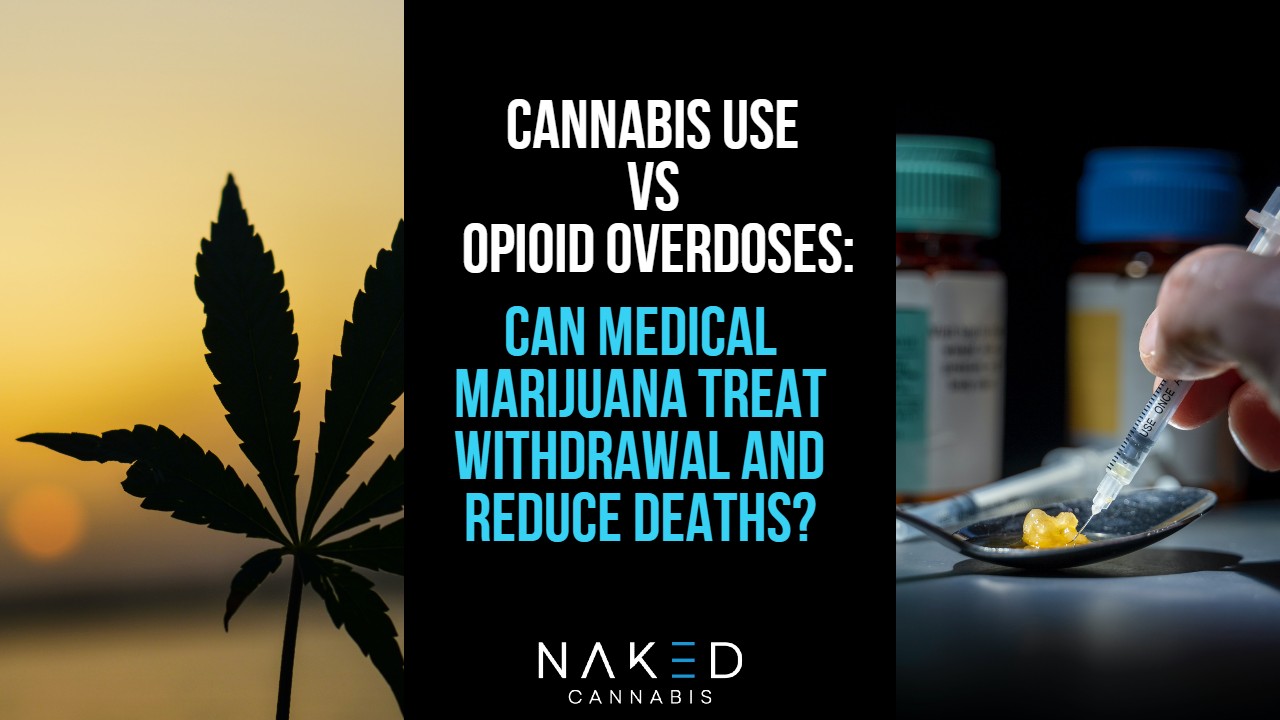
Could cannabis be an effective treatment for opioid abuse?
New evidence says yes.
In fact, studies are linking medical marijuana as an alternative way for addicted individuals to wean off opioids. Furthermore, cannabis could prevent overdose for those addicted to opioids. While the verdict is still pending whether or not marijuana can help an addicted individual abstain from opioids for the long haul, medical cannabis certainly seems to play a key component in the recovery process.
So how can medical marijuana help an individual suffering from opioid addiction? It’s not just about trading one drug for another. In practice, medical cannabis can help reduce unpleasant opioid withdrawal symptoms, as well as lowering the amount of opioid consumption. Read on to learn more about why some experts are suggesting that medical cannabis could be a revolutionary therapy to help opioid users wean off an opioid addiction for good.
What Are Opioids?
Opioid overdose deaths are happening at an alarming rate worldwide. According to the World Health Organization, worldwide, about 0.5 million deaths are related to drug use, and more than 70% of those deaths are related to opioids. It goes on to state that more than 30% of those deaths were caused by an overdose. Opioids, also known as narcotics, can be classified both as prescription drugs as well as street drugs such as heroin. Johns Hopkins Medicine defines opioids as “a class of drugs naturally found in the opium poppy plant and that work in the brain to produce a variety of effects, including the relief of pain with many of these drugs.”
Opioids are generally prescribed to block pain but can also make an individual feel euphoric, relaxed, and happy. When opioids enter the body, the effects are almost immediate and can leave the user with a rush of pleasure as well as feeling “high”. Opioids essentially fire up the brain’s reward system and alter the way the brain reacts to pleasure and pain.
They also trigger the release of feel-good endorphins, and aside from relieving pain, can make otherwise mundane tasks seem pleasurable. The problem with opioids is that over time they change the chemistry of the brain, hence producing a tolerance to the drug and requiring an individual to take more of the drug to get the same effect. This, in turn, can result in an opioid overdose death.
When opioid dependence happens, the brain stops producing feel-good endorphins on its own, and opioid abusers can also suffer distressing withdrawal symptoms such as shallow breathing, sweating, nausea, chronic constipation, debilitating anxiety, and these are just to name a few. The most devastating consequence of opioid abuse is an overdose that can lead to death.
In the end, opioid dependence can be a life-threatening addiction that comes with a myriad of adverse side effects. To break out of this vicious cycle, an addicted individual must choose to either cease the drug cold turkey or gradually wean from it using a “tapering” process. This, of course, could include the use of medical cannabis for the prevention of overdose as well as lessening the severity of withdrawal symptoms in opioid users.
Medication-Assisted Treatment Vs. Medical Cannabis for Withdrawal
Opioid tapering or weaning means gradually reducing the amount of opioids consumed by the addicted individual. Opioid tapering involves controlling the frequency and dose of the specified opioid. It is shown to help reduce the risk of unpleasant withdrawal symptoms related to opioid abuse as well as speed up the process of recovery.
Weaning from opioids requires medical support and a plan devised by both the patient and a trained medical professional. When it comes to weaning off of opioids, medical-assisted treatment (MAT) and the use of prescription drugs like Suboxone, offer a way to treat individuals who are dependent on opioids. And while Suboxone has proven to be an effective treatment for tapering off potent opioids, Suboxone itself contains buprenorphine, an opioid, and can also cause a range of adverse side effects. In fact, individuals can become dependent on Suboxone, and once again have to go through withdrawal symptoms to get off the medicine.
So the question most medical professionals and patients ask is “Is it better to quit opioids cold-turkey or with the help of medical-assisted drugs?” The answer isn’t clear. Quitting opioids cold-turkey can cause paralysing and even dangerous withdrawal symptoms for its user. On the other hand, switching one opioid for another (Suboxone) has its own set of consequences.
So what about medical cannabis? Many studies, including the World Health Organization (WHO), have declared the main ingredient in medical cannabis non-addictive and non-toxic. It also lacks evidence of any type of withdrawal symptom. So if medical cannabis could be used to treat opioid dependence why wouldn’t health officials and professionals jump on the idea?
Well, for starters using medical cannabis for the treatment of opioid abuse is still controversial due to issues surrounding marijuana legislation. Mostly, due to that cannabis isn’t legal everywhere, and it hasn’t been officially approved for medical use in treating opioid abuse. While some parts of the world such as Canoada, have legalized both recreational cannabis and medical marijuana with access to cannabis dispensaries, legislation around weed is still on the table.
But the studies are clear, and one panel study done by BMJ in 2021 found that there is an association between cannabis and reduced opioid use. The study, which examined the relationship between the prevalence of medical and recreational cannabis stores and opioid-related deaths concluded that “higher medical and recreational shopfront dispensary counts are associated with reduced opioid-related death rates, particularly deaths associated with synthetic opioids such as fentanyl.”
Moreover, an observational study published in the Canadian Journal of Anaesthesia, showed that chronic pain patients that reported using opioids for pain relief, decreased their opioid consumption by half or “40.8% at baseline to 23.9 at 12 months.” when using medical cannabis as an alternative treatment. Hence, showing that pain can be lessened and general quality of life can be significantly improved with the use of medical cannabis.
Benefits Of Using Medical Cannabis For Opioid Withdrawal Symptoms
Perhaps one of the greatest hindrances to quitting opioids are the uncomfortable and often agonizing withdrawal symptoms that come with it. While rarely life-threatening, withdrawing from opioids can be mentally and physically excruciating. Evidence shows that medical cannabis, in particular the two major cannabinoids THC and CBD, provides a mind-altering effect that relieves unpleasant withdrawal symptoms that stem from quitting opioids. Some major medical cannabis benefits to treat opioid dependence include:
- Increased appetite
- Suppression of pain
- Reduced agitation
- Reduced withdrawal anxiety
- Help with withdrawal insomnia
There are many other benefits when using medical cannabis to treat certain mental and physical afflictions, but the evidence seems promising when it comes to using cannabis as an alternative treatment for opioid dependence. But perhaps the most compelling reason for opioid users to try cannabis is that medical marijuana is proven non-addictive and has little to no side effects if one decides to abstain or withdraw from the drug.
So, What’s The Bottom Line?
The more experts learn about the relationship between medical cannabis and opioid use, the closer medical marijuana gets to becoming a legitimate treatment for addicted individuals. As it stands, studies prove that opioid users experience fewer withdrawal symptoms with the use of medical cannabis. While studies are still emerging, we expect weed to continue to prove why cannabis could be a revolutionary and ground-breaking treatment for opioid dependence around the globe.